New disclosure, old attack: CloudSEK's LiteLLM/TeamPCP findings
You may have seen CloudSEK’s disclosure on the data exposed through the LiteLLM/TeamPCP hack.
The numbers are big: CloudSEK estimates that more than 2,500 organisations and 434,000 CI/CD pipelines were potentially exposed. The data included cloud credentials, repository tokens, SSH keys, Kubernetes secrets, package-publishing credentials and AI provider keys.
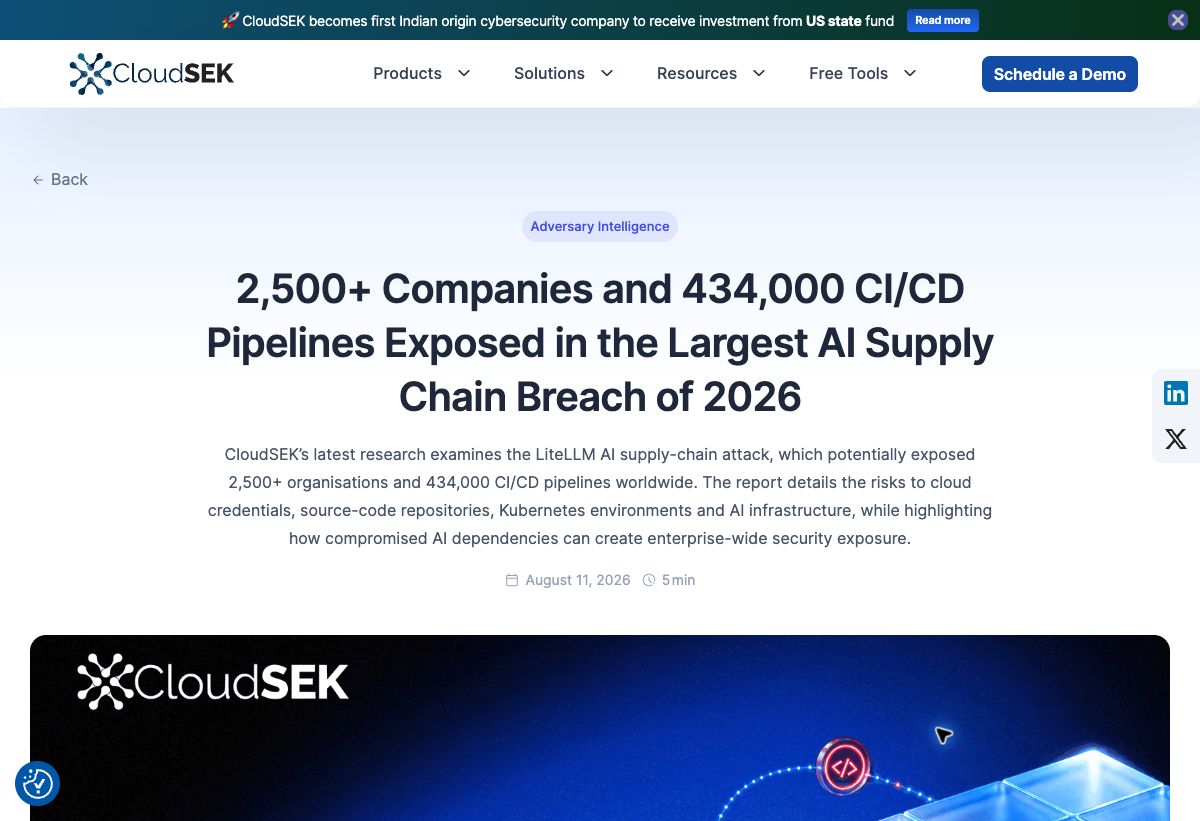
CloudSEK’s disclosure, published 11 August 2026.
That is serious. But an important bit of context is getting lost:
This is still part of the March 2026 TeamPCP supply-chain attack. It is not a new LiteLLM attack.
The campaign began with the compromise of Trivy, a security scanner trusted inside CI/CD pipelines. Stolen access was then used to move through other developer and security tooling. On 24 March, malicious versions 1.82.7 and 1.82.8 of LiteLLM were published to PyPI and remained live for roughly 40 minutes.
The malware was designed to harvest credentials and other secrets from the environments where it ran. CloudSEK’s latest disclosure gives us a clearer view of the possible blast radius of that same incident. It does not mean those organisations have all been newly breached, or that a fresh malicious LiteLLM release is circulating today.
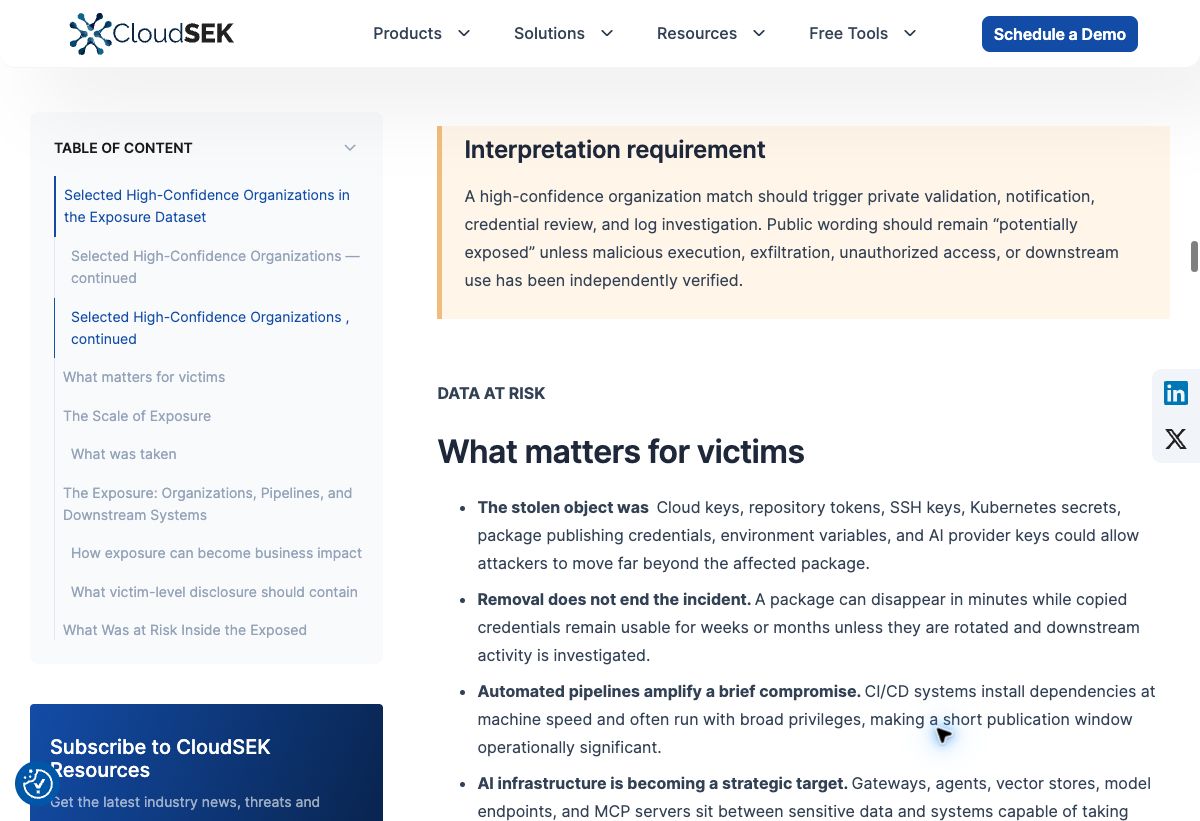
CloudSEK says ‘potentially exposed’ should remain the public wording unless malicious execution, exfiltration, unauthorised access or downstream use has been independently verified.
So: take the disclosure seriously, but do not panic.
If you already investigated the March incident, confirmed that the affected versions never ran—or fully remediated the systems where they did—rotated every credential that was reachable, checked for persistence and reviewed downstream activity, this disclosure does not by itself reset your incident response back to day zero.
If your earlier response was limited to upgrading or removing LiteLLM, revisit it. Removing the package does not invalidate credentials that may already have been copied.
The news today is that we understand the scale better.
The attack itself is the one we have been dealing with since March.